Government ministers have announced plans for one of the biggest ever shake-ups of English local government affecting every level of local decision-making.
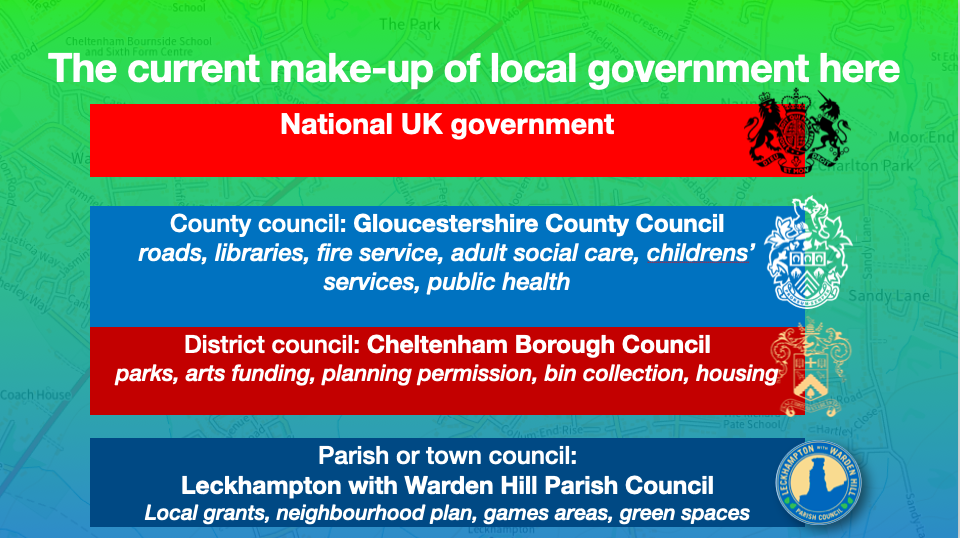
At the moment, Leckhampton residents have three tiers of local government. The county council spends most of our council tax and runs expensive services like adult social care, the fire service, children’s services and public health along with many others. Cheltenham Borough Council runs our parks and gardens, makes local planning decisions, supports and funds arts and culture like Cheltenham Festivals and the Everyman, collects our waste and recycling and runs local council housing for rent. And we have an active parish council too that makes community grants, runs some local facilities and green spaces and has been an active voice on local planning (and is just in the final stages of developing its own Neighbourhood Plan).
But this isn’t the pattern everywhere and ministers want to change it all to be more like other parts of the country. Elsewhere county and district council functions are combined in one unitary authority, like South Gloucestershire (between Stroud and Bristol). It’s less confusing but also less locally accountable. And some much bigger areas have directly elected mayors with significant powers to direct regional investment and speak up for their wider area – think Sadiq Khan in London or Andy Burnham in Manchester. And not everywhere has a parish council, although some areas like Witney or Abingdon in Oxfordshire or Taunton or Bridgewater in Somerset have much bigger parish-equivalents called town councils that take on more local services like arts festivals.
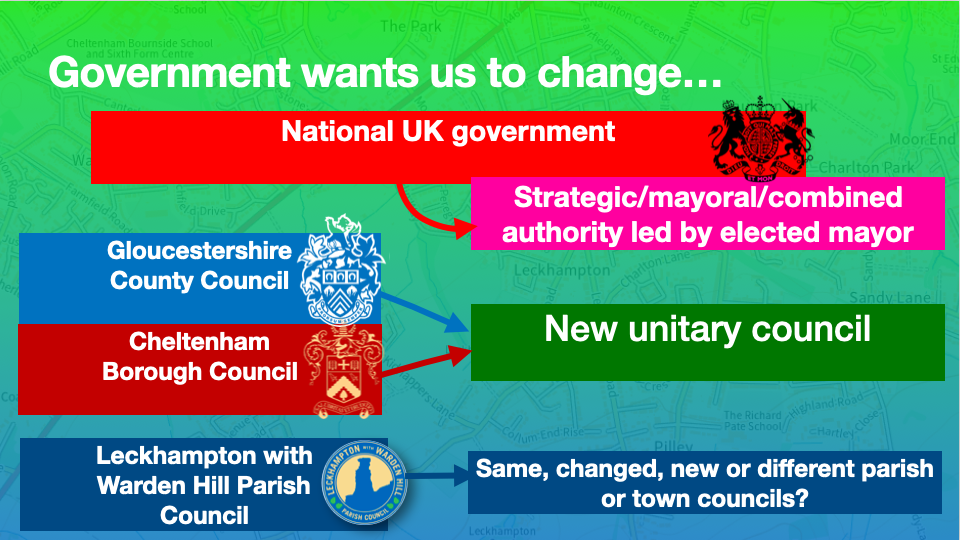
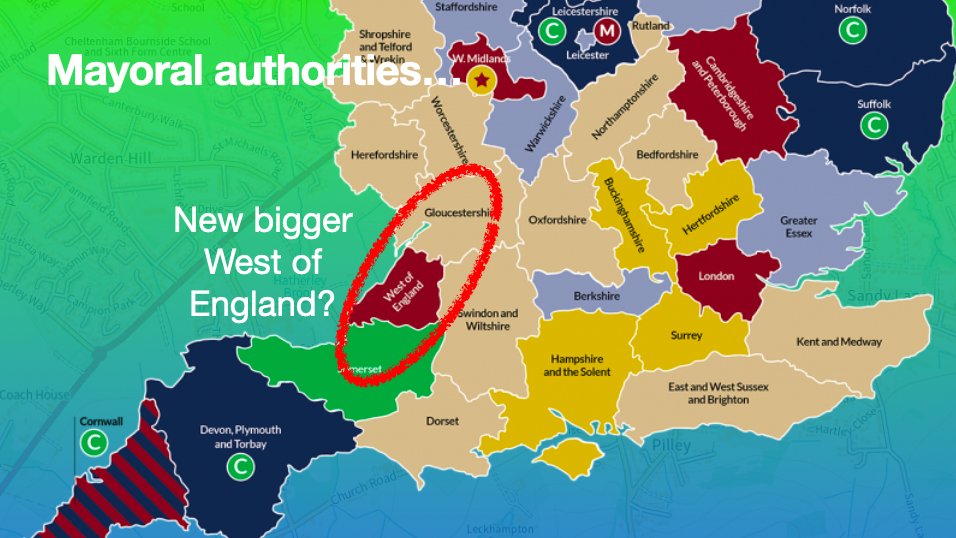
So here we’re likely to have a new elected super-mayor covering a huge area. This will probably be the West of England including the City of Bristol, parts of Somerset, South Gloucestershire and our whole county. In theory they will take some strategic budgets and decisions down from Whitehall but the worry is they might also end up taking powers up and away from our local communities too.
Below that it spells the end of 150 years of local government for Cheltenham as Cheltenham Borough Council would be abolished along with all the other district councils in Gloucestershire and Gloucestershire County Council to make way for a new unitary council combining all their powers and responsibilities. In one way this will simplify who-does-what questions councillors constantly face on issues like recycling and potholes. But it could mean crucial decisions like planning permission for development taken further away from local people and councillors stretched even more thinly as they try to support a much bigger area each.
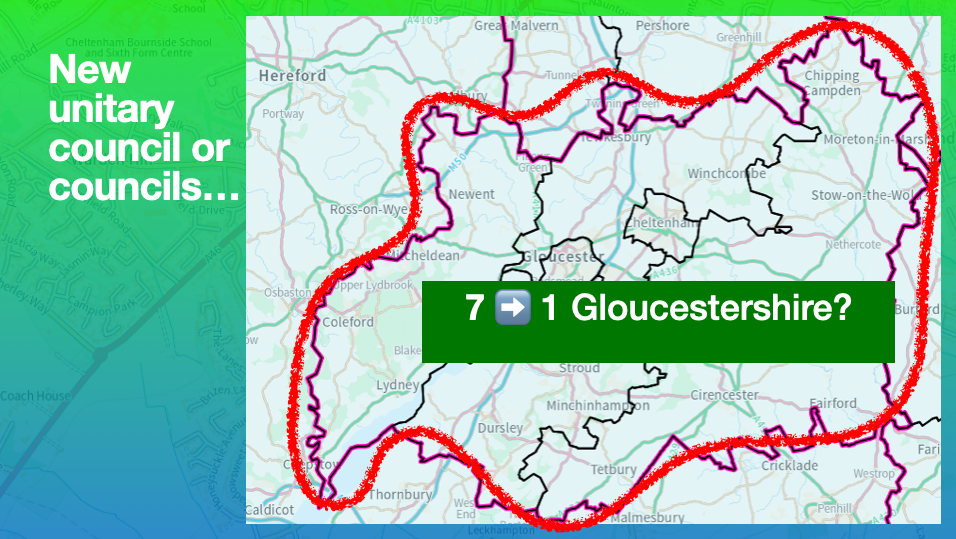
In Gloucestershire we could see one giant super-council for the whole county. Imagine planning permission for housing in Cheltenham or support for Cheltenham Festivals being taken by councillors from Gloucester or the Forest of Dean. This is the preferred option most current Gloucestershire county councillors have voted for and so that is being put to ministers by the county council. But another option being suggested – supported by Max, Julia and Martin – is for roughly half the districts in Gloucestershire to combine into two unitary councils. So we might have a Cheltenham & North East Gloucestershire council that would at least be slightly more local to real communities and mean councillors would still be able to represent smaller communities like Leckhampton. This is now the preferred option Cheltenham Borough Council is putting to government after an overwhelming vote by councillors at borough level.
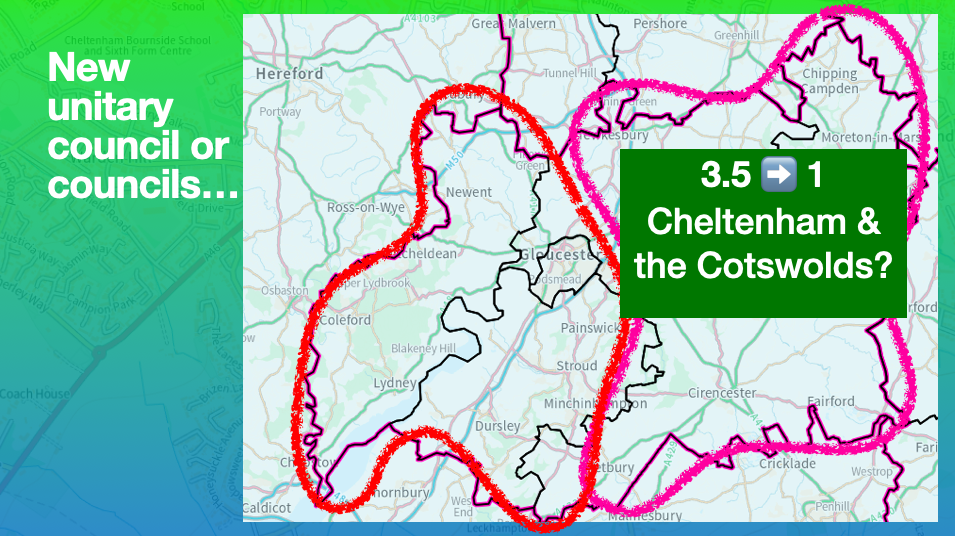
A third option, nicknamed the ‘doughnut’, would see a Greater Gloucester in one unitary council and the rest of the county in another. Gloucester City Council is proposing that to ministers.
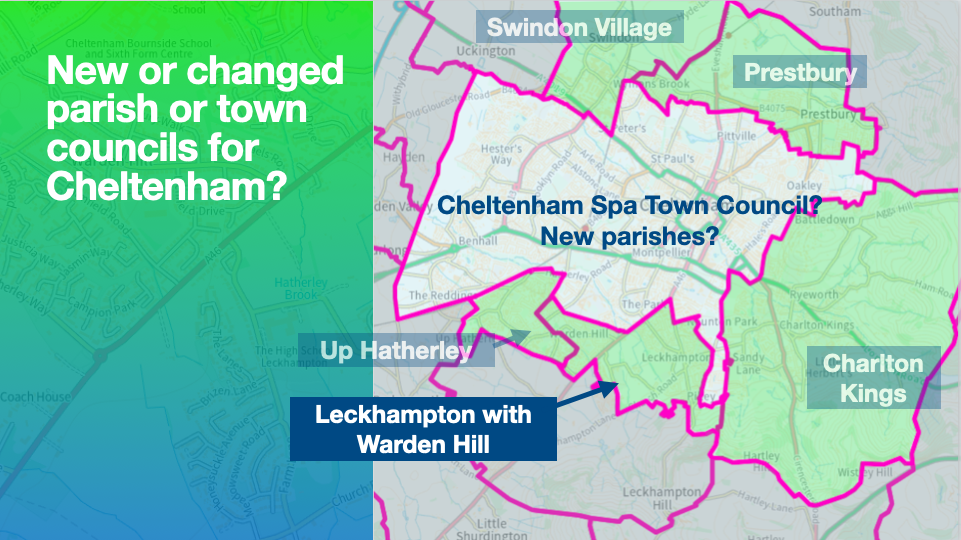
There are even implications for parish councils too – sometimes called town councils in places like Abingdon in Oxfordshire or Taunton in Somerset where they take on more local budgets and services including arts festivals and more local facilities (the technical difference is that town councils have a ceremonial mayor of their own which parishes don’t. So many mayors..). Cheltenham is currently reviewing its parishes and their boundaries and could suggest a new town council covering all or part of Cheltenham that could perhaps pick up some current borough council responsibilities like supporting the arts. More than half the town has no parish council at the moment. Here in Leckhampton we do have a very active and successful parish council which has supported many local campaigns such as renewable energy and better security at Burrow’s Field, a new zebra crossing for Church Road and the protection of our green spaces. Leckhampton with Warden Hill Parish Council has already replied to an initial consultation saying they’d like to stay as the local representative body for our community and could even take in some new areas like Pilley and Bournside.
The biggest frustration with all of this is that ministers are expecting it all to happen at breakneck speed leaving practically no time for local consultation. Cheltenham and Gloucestershire councils have carried out initial consultations – blink and you might have missed them – and our parish council is doing its best, holding a local public meeting earlier in the year and posting news in the local parish newsletter. Government plans to consult everyone in the new year. But the reality is that ministers in Whitehall will ultimately decide. It’s a sad reflection on how centralised the UK is compared to other countries around the world where local and regional government is much stronger and better established and national governments can’t just change everything whenever they feel like it.