Martin has never believed that the best way to help the homeless or make homes affordable was to build all over the countryside. So he has always strongly supported campaigns to protect treasured green spaces in and around Cheltenham.
This includes Daisy Bank, a popular approach to Leckhampton Hill, part of which was recently offered for sale by its longstanding owners. Martin organised for the land to be recognised as an asset of community value, blocking the sale to allow for a possible community bid. See more here.
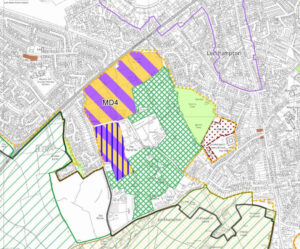
Martin welcomed Lib Dem-run Cheltenham Borough Council’s local plan in 2020. The plan anticipated several hundred new homes (not the thousands that once threatened to engulf all our local green fields) and our new secondary school aimed at local children – but it also permanently protected 26 hectares of Leckhampton’s precious green fields around Kidnapper’s Lane and Farm Lane.
More recently Martin has moved motions at council meetings to declare a nature emergency, commit the council to nature recovery and defend the 16 Local Green Spaces now designated across Cheltenham in any future round of planning at neighbourhood, borough or joint authority level and also
As an opposition MP in Parliament, Martin developed the policy for the Liberal Democrats which was then implemented by the 2010-15 coalition government as the Local Green Space designation. It provides protection for local green spaces like Leckhampton’s not for their landscape value or scientific importance but simply because they are important to local people – providing free recreation and quiet enjoyment, growing local food, improving physical and mental health and absorbing both CO2 and dangerous particulate pollution.
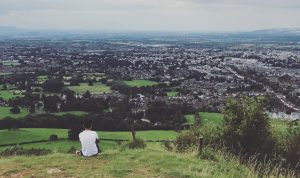 For 40 years, Martin and other local campaigners fought planners who wanted all of Leckhampton’s green fields allocated for future development, often in the teeth of both Labour and Conservative governments’ centrally-driven attempts to undermine the local planning that enables communities to choose the best place to put new housing.
Cheltenham, Gloucester and Tewkesbury councils are now working together on a new Strategic & Local Plan that has to meet even greater housing targets for Gloucestershire. Martin has consistently lobbied for enough housing for local people in need – and for it be zero carbon from the start – but not the tens of thousands dictated by relentless economic growth regardless of environmental consequences. During the previous localplan process, neighbouring councillors like Tewkesbury Conservative councillor Derek Davies condemned Cheltenham Lib Dem councillors as ‘greedy’ and ‘precious’ for trying to protect Leckhampton but in the end planning inspectors ruled out a huge ‘strategic’ development at Leckhampton, reducing the likely housing here from over a thousand houses to several hundred and with most of the green fields permanently protected. We need to make sure the new SLP stands by that protection.
Nationally and locally, Martin has argued for more homes to be built on brownfield sites, in urban city centres in need of regeneration and in smaller developments close to villages and market towns whose shops, post offices, pubs and schools are closing for lack of people. Martin has also called for more action to support rural housing (for instance in and around farms) where it is wanted and needed, tougher measures to bring more of the UK’s hundreds of thousands of empty homes back into use and new powers at local level to encourage the buying and building of more social housing for rent which is where the need is greatest.
