When Cheltenham Borough Council is abolished do you really want one giant super-council for the whole county?

Ministers tell us we must merge all seven of Gloucestershire’s councils into either one or two ‘unitary councils’ carrying out everything from parks and planning permission to libraries and adult social care. See more on the detail of this merger and the two other proposals (at regional and parish level) currently being considered for local government in my earlier blog here.

The reorganisation of principal councils means that Cheltenham Borough Council will be swallowed up after 150 years of local democracy, along with all the other five district councils in Gloucestershire.

That’s worrying.

How far from Cheltenham’s regency town centre or Tewkesbury’s medieval heart will decisions on planning permission be taken? What price the support Cheltenham gives to Cheltenham Festivals, the Everyman Theatre or the Cheltenham Trust that runs the Pump Room and Town Hall once Cheltenham is subsumed inside a much larger council?
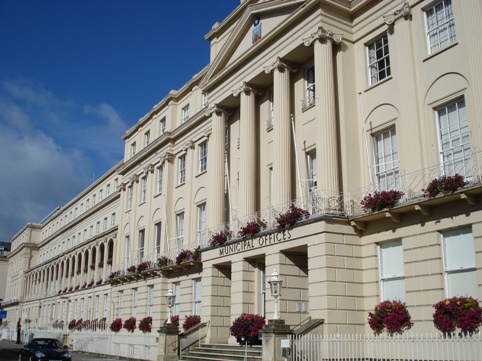
The impressive Municipal Offices on Cheltenham's Promenade

At least Government is asking our view on whether one giant super-council covering the entire county is better than two smaller unitary councils. Find their consultation and respond here.

I want a smaller council for our area because I strongly believe that small is not just beautiful but usually more accountable, responsive and efficient so my strong preference is for two smaller unitaries.

Any one community will automatically have a louder voice in a smaller local authority.

Two unitary councils instead of one would be more responsive and less bureaucratic.

It’s the same pattern we see in business. Small companies are more agile, more creative and adapt faster. Grow too big and that edge soon wears off.

And if we do get two unitary councils, I’m definitely for the straightforward east/west merger of districts and county responsibilties not the proposal for a ‘Greater Gloucester’ combined with a ‘Doughnut’ containing everywhere else in Gloucestershire, including Cheltenham. I can see that would work well for Gloucester but it would leave the rest of us in the worst of all worlds – a council with fewere resources but still stretched across pretty much the whole county and almost as remote as a single super-council.

Some people worry that the two unitary model would “split” Gloucestershire.

Well, we’d all still be Gloucestershire. Just like Bath is still in Somerset and Swindon is still in Wiltshire.

But that smaller model has happened almost everywhere else that has gone down the unitary road before us. Berkshire, Shropshire, Cheshire, Bedfordshire, Northamptonshire, Wiltshire, Dorset, Buckinghamshire, Cumbria, North Yorkshire and most recently Somerset – all now represented by at least two unitaries. If Bath and Swindon weren’t subsumed into giant countywide councils, why us?

I’m sure all those other counties agonised over dividing county services too.

But in their Ofsted and Care Quality Commission ratings, you find just the same variety as in any other set of councils with many achieving real excellence. Children’s services in York and in North Yorkshire – outstanding. Adult social care in Milton Keynes – outstanding. Children’s services in Telford – outstanding. And in Wiltshire outside of Swindon – outstanding.

Bigger really isn’t always better. Just look at the state of our roads – organised over many years on a countywide basis. The county’s children’s services have struggled in past years too and it has taken a huge effort to get them back up to scratch. Compared that with the consistently well run services by our local borough council, including our parks and gardens and our recycling collection.

Even the financial data shows east and west would be practically equal – an estimated variation of only £20m on combined budgets of £850m or just 2%. The latest government funding formula strongly favours less well-off councils anyway so any inequality is likely to be quickly ironed out.

EF Schumacher wrote back in 1974 that “we are generally told that gigantic organisations are inescapably necessary” but that amongst real people “there is a tremendous longing and striving to profit, if at all possible, from the convenience, humanity and manageability of smallness.”

I agree and I’d urge everyone to respond to the consultation and back two smaller councils not one giant super-council.
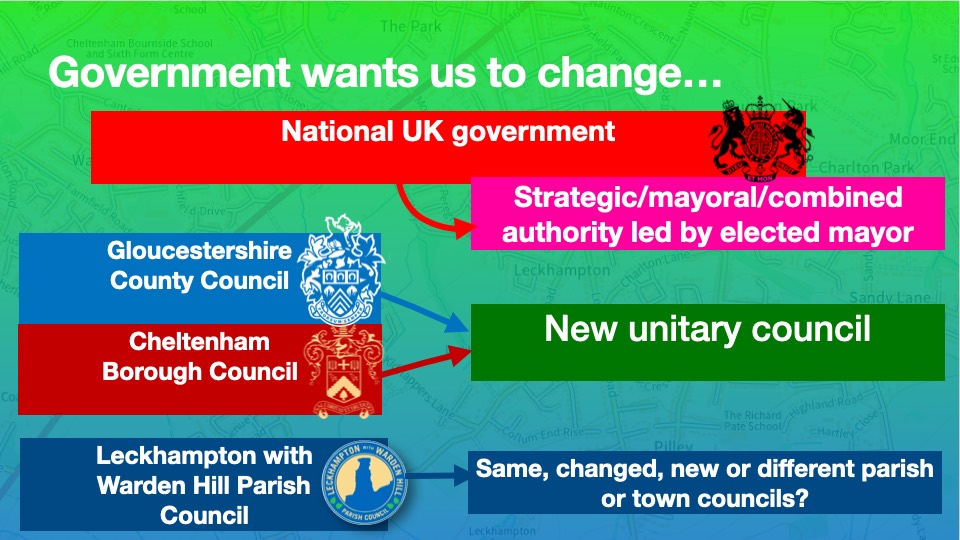

The planned shake-up of local government explained

Labour ministers, clearly short of things to do, have launched one of the biggest ever shake-ups of English local government. Cheltenham Borough Council and Gloucestershire County Council could both be abolished, we could have a new executive super-mayor like Sadiq Khan or Andy Burnham covering an area as far afield as Bristol and it could even mean changes at parish level too. Our MP Max Wilkinson and I are worried this could mean decisions that affect us in Leckhampton being taken much further from our community by councillors who have no real local knowledge. But ultimately it looks like it will be ministers in Whitehall who decide. I’ve explained the changes in more detail here.

A417 – road safety & environmental concerns remain after 20 years of delay

On 24 January 2022 I gave evidence to the examination by government inspectors of the proposed scheme for the A417 which has been hotly debated for more than 20 years. Despite all the years of delay the scheme the government is proposing still raises landscape, environmental, cultural and even new road safety concerns. And they wouldn’t pay for the schemes found to be have the best environmental, social and economic outcomes. Read my take on the A417 here.

After a 40 year battle, Leckhampton’s green fields are protected today

There have been a few compromises and defeats along the way but this afternoon, after more than 40 years of local campaigning, most of Leckhampton’s much-loved green fields around Kidnappers’ Lane and Farm Lane will today be designated as a protected Local Green Space when the new Cheltenham Plan is adopted by the borough council.

The green fields are an oasis of green space, ancient hedgerows and accessible pathways, the last remnant within the borough of Cheltenham of the medieval pattern of small fields, meadows and smallholdings that once characterised most of this area. Thousands of local people have joined repeated campaigns to fend off the loss of the entire area almost all of which has been optioned by developers.

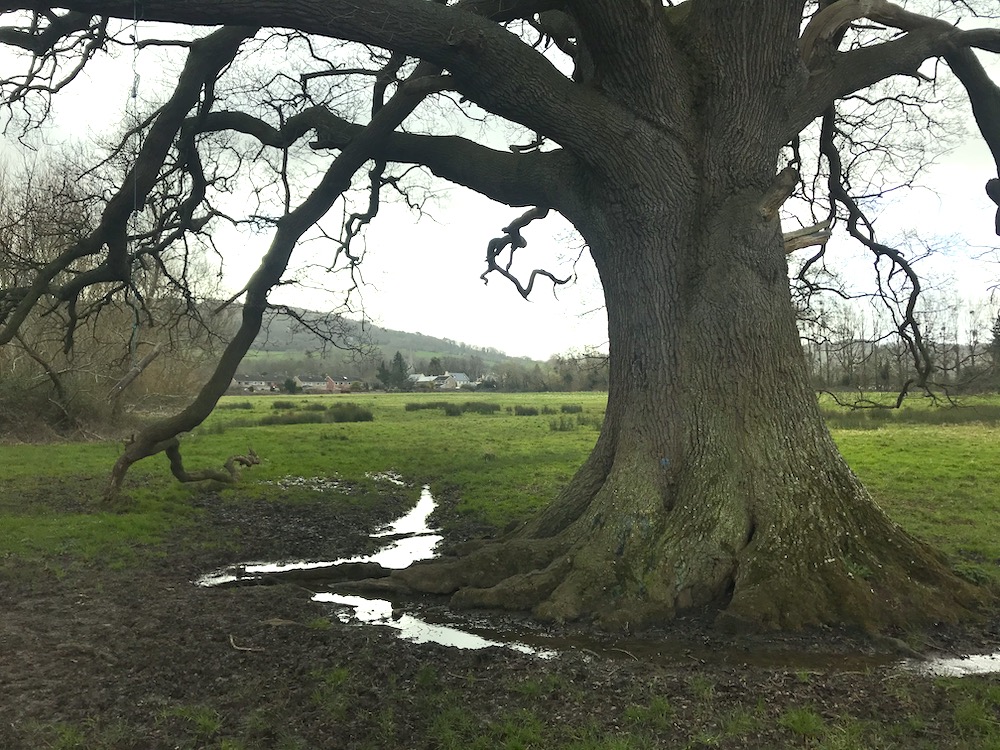
Lott Meadow, a miraculous survival of an ancient field from medieval times, now a haven for local bats and many other species, and enjoyed and valued by thousands of local people – and now finally protected at the heart of the new Local Green Space designation

As well as protecting much of the green space, today’s Cheltenham Plan, in accordance with the hotly contested Joint Core Strategy agreed with Gloucester and Tewkesbury, also allows space for at least 250 new homes, most of them next to the Shurdington Road in the so-called ‘northern fields’ with some going on old nursery sites further up Kidnappers Lane. Since hundreds of new homes have also just been built at the corner of Farm Lane and Leckhampton Lane (permitted against furious local opposition by the neighbouring borough of Tewkesbury), the Leckhampton community is currently contributing more to local housing need than most other parts of Cheltenham. And thanks to the county council literally moving the goalposts, a new secondary school is also expected to be built on fields that were previously agreed to be remaining entirely green as playing fields. Your local Lib Dem councillors Iain Dobie and myself have fought to ensure that at least the buildings are more environmentally friendly and local hedgerows and natural habitats are protected in the process. And while many planning inspectors’ enquiries have supported campaigners in protecting the valued green fields for their rural character, the most recent inspector arbitrarily reduced the size of the Local Green Space designation which could be protected.

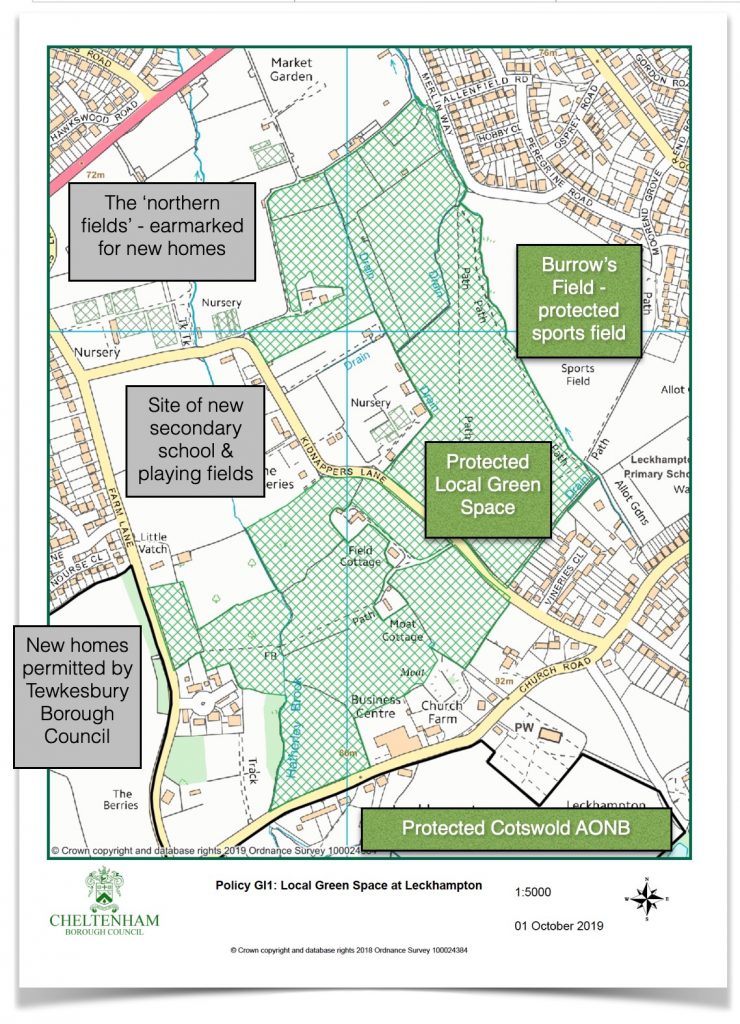
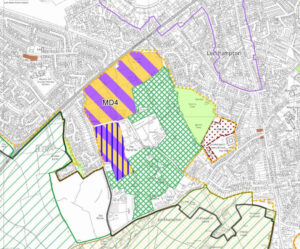
Leckhampton in the Cheltenham Plan being adopted today. The new Local Green Space designation which offers strong protection to green spaces important to local people, is shaded in green.

The Local Green Space designation didn’t even exist 40 years ago and the whole area was ‘safeguarded’ for future development. Campaigners like local Liberal councillor Kit Braunholtz and my father Don Horwood couldn’t claim the area enjoyed the chocolate box landscape of the nearby Cotswolds AONB or many particularly rare species that would have earned scientific protection nor was any of the area recognised under archaic ‘village green’ laws. But they rallied thousands of local people under the banner of the Leckhampton Green Land Action Group. Wider opinion about the environment was already changing too: the value of local green spaces to peoples’ mental and physical health, their biodiversity and ‘ecosytem services’ in reducing carbon emissions, filtering out air pollution, absorbing flood water and providing free recreation were all gaining more recognition.

In 2006 a previous Cheltenham Plan introduced by the Lib Dem administration recognised the area’s unique rural character and importance but the threats were still there: Labour’s top-down Regional Spatial Strategy or RSS threatened to overturn local plans and impose urban sprawl on Leckhampton, sacrificing all the green fields. I had just become an MP and wrote a new policy for the Lib Dem opposition which would create a new designation that offered a high level of protection on the basis of a green space’s well-established importance to local people, not just to great crested newts or landscape painters. This policy made it into the Lib Dem manifesto in 2010 and from there straight into the new coalition’s Programme for Government. The coalition quickly abolished Labour’s toxic RSS and, against all the odds, the new Local Green Space designation made it into the new National Planning Policy Framework in 2012. Some councils (like Tewkesbury) largely ignored it but Cheltenham’s Lib Dem administration enthusiastically planned to designate dozens of vital green spaces across Cheltenham’s urban area including the Leckhampton fields. In all 16 will be designated today including vital green spaces in Fairview, St.Mark’s, Hesters Way, Benhall, Charlton Park and Hatherley.

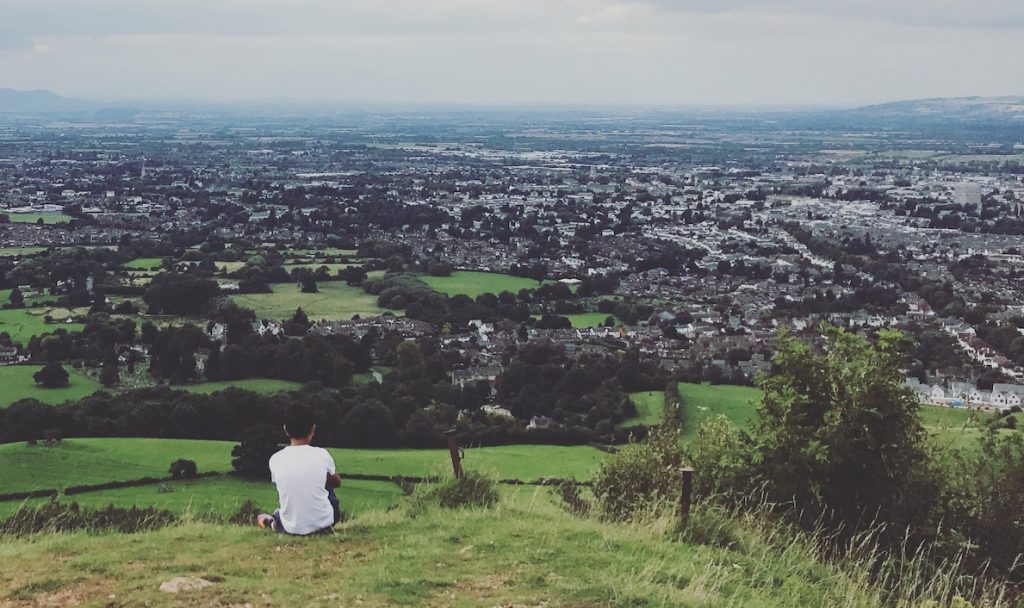
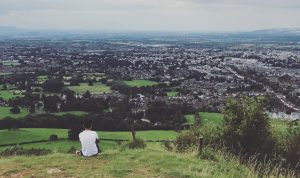
Leckhampton’s green fields from the Cotswolds Area of Outstanding Natural Beauty at Leckhampton Hill, visible as islands of green amongst the growing urban area.

While this process ground slowly forward, Leckhampton’s active Parish Council picked up where the early campaigners left off and fought tooth and nail alongside local borough councillors to protect the fields from overdevelopment based on growth-based housing projections often way in excess of local housing need.

The outcome isn’t the complete protection of the whole area my father and others originally campaigned for but councils rightly have to strike a balance between the genuine pressures for new homes and schools and the need to protect the most important green spaces for local people and particularly the children who will live in those homes and go to those schools. I’m proud that Cheltenham Borough Council has managed to square that awkward circle and will today deliver the strong protection for most of the Leckhampton fields for which we have campaigned for decades – and proud to have played my own part over decades.

We now have to make sure this protection is defended against reviews of the Joint Core Strategy, planning “reforms” by the new Conservative government and the constant, well-funded pressure of developers. We can develop our own Neighbourhood Plan and plan to encourage use of the green fields and educate everyone about their importance to our own health and wellbeing, our community and the local and global environment.

Parish and borough councillor Martin Horwood, 20 July 2020

Martin Horwood MEP raises contradictory UK stance on Iran nuclear deal in the European Parliament

Yesterday in ⁦⁦the European Parliament⁩ I raised the contradiction between Foreign Sec Raab’s support for JCPOA (the Iran nuclear deal) and Boris Johnson’s call to replace it with a ‘Trump deal’.

Yesterday in ⁦⁦the European Parliament⁩ I raised the contradiction between Foreign Sec Raab’s support for JCPOA (the Iran nuclear deal) and Boris Johnson’s call to replace it with a ‘Trump deal’.

EU foreign polic⁦y chief Josep Borrell Fontelles⁩ wisely replied he believes Raab.

Science Matters

Science matters, so I visited the Royal Society to get a better understanding of the impact Brexit is already having on UK science and the impact actually leaving might have.

The best deal for the future of British science is the one we already have. We must stop Brexit to safeguard the future of British science.

Saving green spaces

Martin has never believed that the best way to help the homeless or make homes affordable was to build all over the countryside. So he has always strongly supported campaigns to protect treasured green spaces in and around Cheltenham.

This includes Daisy Bank, a popular approach to Leckhampton Hill, part of which was recently offered for sale by its longstanding owners. Martin organised for the land to be recognised as an asset of community value, blocking the sale to allow for a possible community bid. See more here.

Cheltenham’s new local plan allows for new homes and a brand new secondary school (purple and yellow striped area) but also permanent protection for Leckhampton’s most precious green fields after a 40 year battle to preserve them (green cross-htached area). Burrrow’s Field (pale green) is protected as a sports field.

Martin welcomed Lib Dem-run Cheltenham Borough Council’s local plan in 2020. The plan anticipated several hundred new homes (not the thousands that once threatened to engulf all our local green fields) and our new secondary school aimed at local children – but it also permanently protected 26 hectares of Leckhampton’s precious green fields around Kidnapper’s Lane and Farm Lane.

More recently Martin has moved motions at council meetings to declare a nature emergency, commit the council to nature recovery and defend the 16 Local Green Spaces now designated across Cheltenham in any future round of planning at neighbourhood, borough or joint authority level and also

As an opposition MP in Parliament, Martin developed the policy for the Liberal Democrats which was then implemented by the 2010-15 coalition government as the Local Green Space designation.  It provides protection for local green spaces like Leckhampton’s not for their landscape value or scientific importance but simply because they are important to local people – providing free recreation and quiet enjoyment, growing local food, improving physical and mental health and absorbing both CO2 and dangerous particulate pollution.

For 40 years, Martin and other local campaigners fought planners who wanted all of Leckhampton’s green fields allocated for future development, often in the teeth of both Labour and Conservative governments’ centrally-driven attempts to undermine the local planning that enables communities to choose the best place to put new housing.

Cheltenham, Gloucester and Tewkesbury councils are now working together on a new Strategic & Local Plan that has to meet even greater housing targets for Gloucestershire. Martin has consistently lobbied for enough housing for local people in need – and for it be zero carbon from the start – but not the tens of thousands dictated by relentless economic growth regardless of environmental consequences.  During the previous localplan process, neighbouring councillors like Tewkesbury Conservative councillor Derek Davies condemned Cheltenham Lib Dem councillors as ‘greedy’ and ‘precious’ for trying to protect Leckhampton but in the end planning inspectors ruled out a huge ‘strategic’ development at Leckhampton, reducing the likely housing here from over a thousand houses to several hundred and with most of the green fields permanently protected. We need to make sure the new SLP stands by that protection.

Nationally and locally, Martin has argued for more homes to be built on brownfield sites, in urban city centres in need of regeneration and in smaller developments close to villages and market towns whose shops, post offices, pubs and schools are closing for lack of people. Martin has also called for more action to support rural housing (for instance in and around farms) where it is wanted and needed, tougher measures to bring more of the UK’s hundreds of thousands of empty homes back into use and new powers at local level to encourage the buying and building of more social housing for rent which is where the need is greatest.

Brexit

Martin passionately believes Brexit was wrong for this country.  He still believes our future safety, prosperity, environment and culture will all benefit from membership of the European Union.  Even Leave voters must now despair of the Conservative government’s inept and disunited approach both to the EU negotiations and the continuing problems caused by Brexit which have been masked by the Covid epidemic but will become incresaingly clear as busibesses continue to struggle to export goods and services, all organisations struggle to recruit staff and everyone from Ukrainian refugees to British holidaymakers face more and more bureaucracy that just didn’t exist when we part of the EU.

Martin supported the British people having the final say on the Brexit plan with the option to vote to remain in the EU after all. That chance was lost after just 43% of voters backed Boris Johnson’s Conservatives in the 2019 general election.  Only our crazy voting system delivered the ‘landslide’ majority he needed to push Brexit through.

As the Lib Dem party spokesperson on Europe in the 2010-15 parliament, Martin repeatedly confronted anti-European Conservative and Labour MPs who were pressing then Prime Minister David Cameron to bring in the Referendum Bill.

During the referendum campaign itself, Martin put a strong case for Britain remaining in the European Union.  He still believes EU membership is:

  • The best guarantee of British jobs and future prosperity, through our full membership of the world’s largest single market
  • Enormously important for tackling cross-border organised crime, people trafficking and terrorism, and for bringing British and other EU criminal suspects to justice through the European Arrest Warrant and EU agencies such as Europol
  • The best way for Britain to find its voice in highly competitive global negotiations on everything from climate change to world trade
  • The best way of safeguarding the environment which transcends national boundaries and requires co-ordinated action for its protection
  • An effective guarantor of many human rights, consumer protections and employment rights
  • An enormously important cultural, educational and scientific benefit to the UK, and in particular for future generations.

Martin told local businesses during the campaign: “Cheltenham businesses, from high-end engineering firms to the social care sector, benefit from millions in investment from within the EU and employ hundreds of people from other European Union countries and would in many cases struggle to fill those posts if visa or residence qualifications ever got in the way. Our businesses benefit from their skills and productivity, the UK benefits from the taxes they pay – and of course we get the right to live, work, study, sell our goods and services and even retire anywhere in Europe on the same terms as local citizens. Why would we throw all that into doubt with a costly and uncertain divorce from Europe?

Sadly, the vote for Brexit has already damaged the UK.  It was followed by an immediate drop in the value of the pound, business confidence and investment has faltered, the NHS, public sector and many companies now face a crisis in recruitment and retention of valued European staff and young people feel rightly cheated of their future work and study opportunities.  There is good evidence we have sacrificed as much as 3% GDP growth after the vote.

Martin moved the policy amendment at the 2020 Liberal Democrat conference that guaranteed the party remains committed to a long-term goal of rejoining the European Union.